
Category: Leadership

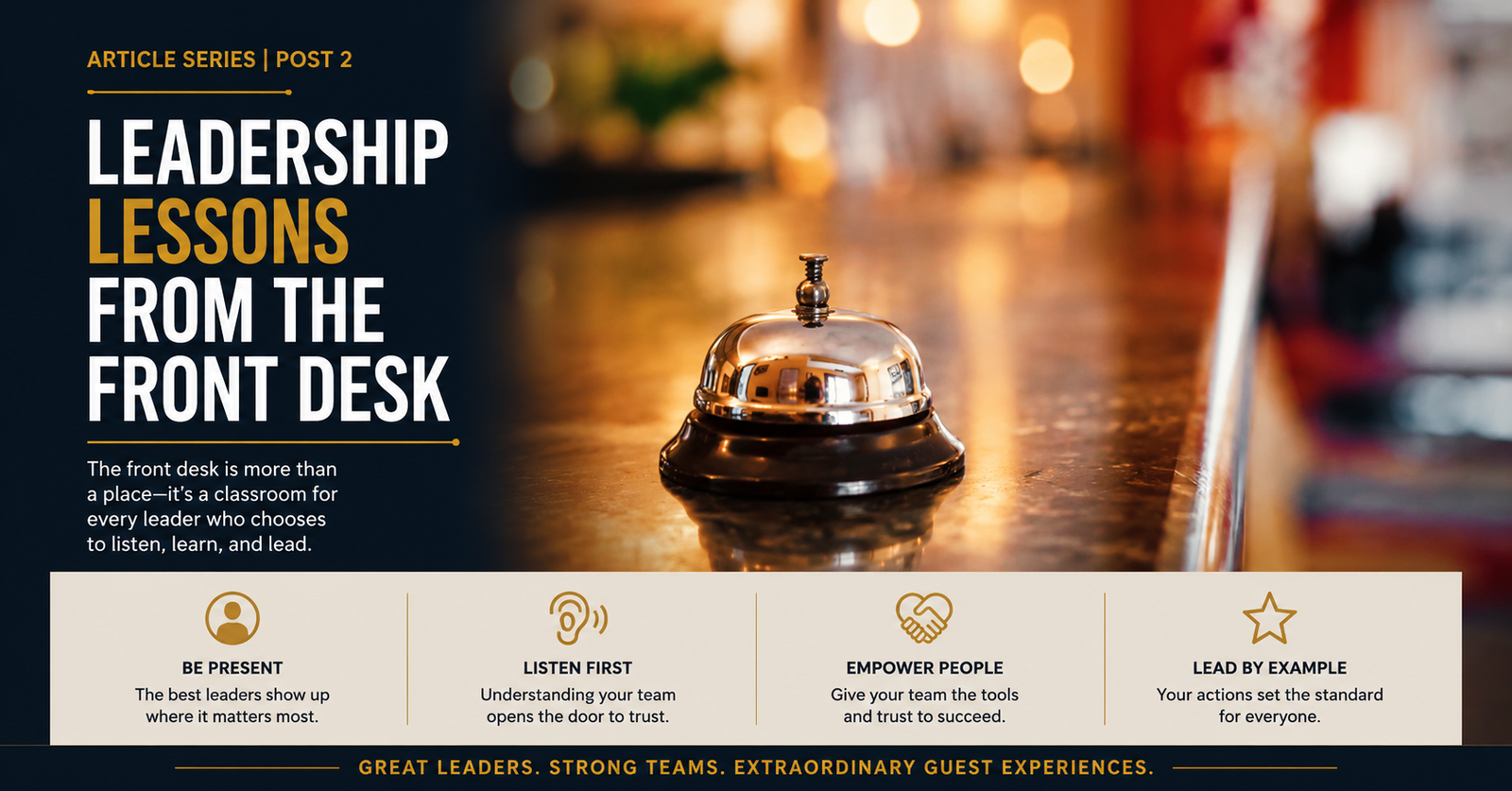
  • Leadership Lessons From the Front Desk

    Leadership Lessons From the Front Desk

    When service becomes hospitality.

    People often assume leadership begins the day you receive a management title. My experience has taught me something different: leadership can begin long before the title arrives.

    Long before I became General Manager of Hotel 17 in New York City, I stood behind the front desk welcoming guests from around the world. Every shift brought different personalities, unexpected situations, competing priorities, and opportunities to make someone’s day a little better. Looking back, I realize those years shaped my leadership philosophy more than any management course ever could.

    Years later, when I became a General Manager, many of the skills I relied on every day had already been developed behind that desk—listening, solving problems, staying calm under pressure, making decisions, taking responsibility, and understanding that sometimes the smallest gesture can completely change someone’s experience.

    The front desk is where hospitality becomes personal. Every guest arrives with a different story. Some are excited to explore New York City. Others are exhausted after a long journey or dealing with unexpected travel problems. Some simply want a clean room, a little reassurance, and a warm welcome. Those interactions taught me an important lesson: people may not remember every detail of what happened, but they often remember how an experience made them feel.

    01Leadership Starts with Listening

    One of the greatest skills I learned at the front desk was to listen before trying to solve a problem. When a guest is frustrated, the first solution is not always a discount, an upgrade, or an explanation. Sometimes the first thing a person needs is to know that someone has genuinely heard the concern.

    The same principle applies to leading a team. Employees become more engaged when they know their ideas are heard, their concerns matter, and they can speak openly with their manager. Listening does not mean agreeing with everything. It means understanding the situation before deciding how to respond.

    Over the years, I have come to see listening not as a soft leadership skill, but as one of the strongest management tools we have.

    Listening is not a weakness. It is one of the strongest leadership tools we have.

    02The Front Desk Teaches Ownership

    The front desk also taught me that leadership does not require a title. When a problem happens in front of you, the guest is rarely interested in which department caused it or who is officially responsible. The guest wants to know that someone is willing to take ownership and help.

    I learned not to simply say, “That is not my department.” Instead, I learned to listen, find the right person or solution, follow through, and make sure the guest knew someone was taking responsibility.

    That lesson later shaped the way I led my team. I wanted employees to feel empowered to solve problems, make thoughtful decisions, and know that I would support them when they acted responsibly and in the best interest of the guest. To me, leadership begins not with authority, but with responsibility.

    03Culture Begins with the Leader

    People often ask what creates a strong hotel team. For me, it begins with respect and consistency. Treat people fairly. Give them the tools and information they need to succeed. Recognize their effort. Coach them when something goes wrong, and celebrate their growth when they improve.

    A manager’s behavior becomes part of the culture. If we expect employees to remain calm with a difficult guest, communicate respectfully, take ownership, and support one another, leadership has to demonstrate those same behaviors.

    When employees know their manager believes in them, confidence grows. That confidence eventually reaches the guest through better communication, stronger teamwork, and a greater willingness to go beyond the basic requirements of the job.

    04Excellence Lives in the Small Details

    Hospitality is built on details: a genuine welcome, a clean lobby, remembering a returning guest, responding quickly to a maintenance concern, following through on a promise, or offering help before someone has to ask. Individually, these actions may seem small. Together, they create trust.

    Guests do not return simply because of a comfortable bed. They return because the overall experience gave them a reason to remember the property and the people who work there. Many returning guests have told us that they come back because they know they will be welcomed by familiar faces who genuinely care about their stay.

    To me, there is no greater compliment. It means the team has moved beyond completing a transaction and created a relationship.

    05The Front Desk Never Stops Teaching

    Although my title has changed over the years, I still carry the lessons I learned behind the front desk. Leadership is not about having all the answers. It is about setting the example, remaining available, staying composed during difficult moments, supporting your team, and remembering that every interaction matters.

    The front desk taught me that hospitality is ultimately about people. It also taught me that leadership and service are not separate ideas. The way we treat our employees influences the way they treat our guests, and the way our guests feel ultimately influences whether they choose to return.

    After more than two decades in hospitality, that remains one of the most rewarding parts of my career: seeing a team take pride in caring for guests and watching those guests come back because they remember how they were treated.

    When you take care of your team, your team takes care of your guests.

    What leadership lesson has your career taught you? I’d enjoy hearing your thoughts.

    A free first look

    If any of this sounds like your hotel, I’ll take a look at it—the website, the rates, the guest journey—and send you three clear observations. No cost. No obligation.

    Request your free first look →

  • Why Great Teams Create Loyal Guests

    Why Great Teams Create Loyal Guests

    Leadership lessons from within.

    Every hotel has rooms, beds, and amenities. What guests truly remember, however, is how they were treated.

    After more than two decades in the hospitality industry, I’ve come to believe one simple truth: a hotel’s greatest asset isn’t its building, its location, or its amenities. It’s the people who make every guest feel genuinely welcome.

    As General Manager of Hotel 17, I’ve learned that great hotels are never built by one person. They are built by a team united by a shared commitment to delivering exceptional guest experiences, day after day.

    When guests stay at Hotel 17, they often compliment our friendly staff, clean rooms, welcoming atmosphere, and the genuine service they receive throughout their stay. Reading those positive online reviews is always rewarding, but I know those comments represent much more than a successful stay—they represent the dedication of an entire team working together toward a common goal.

    Building that kind of team doesn’t happen overnight. It requires patience, consistency, trust, and a leadership philosophy that values people as much as performance. Over the years, I have focused on several principles that I believe are essential to building a team capable of performing above and beyond expectations.

    01Hire for Attitude and Train for Skill

    Technical skills can be taught. A positive attitude, a willingness to help others, and genuine care for guests are much harder to teach. Character is the foundation of exceptional hospitality.

    02Lead by Example

    Leadership is not about giving instructions from behind a desk. Whether helping resolve a guest concern, supporting a busy front desk, or responding to an unexpected operational challenge, I believe employees should see their leaders willing to work alongside them. Respect is earned through actions, not titles.

    03Create a Culture of Respect

    Every department contributes to the guest experience. Housekeeping, maintenance, front office, accounting, security, and administration all play equally important roles. When employees respect one another’s contributions, teamwork becomes natural. When employees feel respected, listened to, and supported, they naturally extend that same respect to every guest who walks through the door. In my experience, exceptional guest service always begins with a workplace culture where people value one another.

    04Communicate Openly and Honestly

    Many of the challenges we face in hospitality can be resolved through good communication. Clear expectations, regular feedback, and open conversations help prevent misunderstandings and build trust across every department.

    05Coach Instead of Blame

    Mistakes happen in every business. I view them as opportunities to learn and improve rather than reasons to discourage employees. A team grows stronger when people feel supported and encouraged to develop.

    06Recognize Effort, Not Just Results

    Some of the hardest work in hospitality happens behind the scenes and often goes unnoticed by guests. Taking the time to acknowledge dedication, teamwork, and extra effort helps create an environment where people feel valued and motivated.

    07Never Stop Learning

    Hospitality continues to evolve, and so should we. Encouraging continuous learning, adapting to new technologies, improving operational processes, and sharing knowledge keeps both individuals and the organization moving forward.

    These principles have helped us build a team that consistently supports one another, takes pride in their work, and delivers memorable guest experiences. They have also contributed to something that means a great deal to me—guests who recognize our team’s professionalism through positive online reviews and, even more importantly, guests who choose to return.

    The real measure of a great team is consistency. Anyone can deliver exceptional service on a good day. Great teams deliver it every day—even when the hotel is full, unexpected challenges arise, and the pressure is high. Guests notice that consistency, and over time it becomes one of the main reasons they choose to return.

    Our hotel has welcomed guests from around the world for decades, but regardless of where they come from or why they visit New York, every guest wants the same thing—to feel welcomed, respected, and valued.

    One of my favorite moments as a General Manager is watching a returning guest walk through our front doors.

    One afternoon, a familiar guest returned to Hotel 17 after being away for quite some time. Before reaching the front desk, one of our longtime associates looked up, smiled warmly, and said, “Welcome back! It’s wonderful to see you again.” The guest paused for a moment, smiled, and replied, “You remembered me…that means a lot.”

    The guest wasn’t impressed because someone remembered a reservation number—they felt remembered as a person.

    Moments like that cannot be taught through procedures alone. They are the result of a culture where people genuinely care—not only about the guests they serve, but also about each other.

    When employees enjoy coming to work, feel appreciated, and take pride in what they do, those feelings naturally extend to every guest interaction. That is when hospitality becomes more than a service—it becomes a memorable experience.

    Guests don’t return because they remember your room. They return because they remember how your people made them feel.

    In today’s competitive hospitality industry, guests have countless accommodation options. Price and location may influence where they book the first time, but genuine hospitality is what brings them back.

    Looking back on my career, I realize that every accomplishment we’ve achieved at Hotel 17 has been the result of people working together with a shared purpose. I am incredibly proud of our team. Their professionalism, dedication, and genuine care for our guests have created an environment where visitors feel welcomed from the moment they arrive until the moment they leave.

    You may ask, why do great teams create loyal guests? The answer is simple. Leadership is not about standing in front of your team—it is about standing with your team.

    Guests may remember a beautiful lobby. They may remember a comfortable room. But what they never forget is how your people made them feel.

    Great hotels may attract guests,
    but great teams create loyal guests.

    What leadership principle has helped your team create lasting relationships with guests? I’d love to hear your thoughts and experiences.

    A free first look

    If any of this sounds like your hotel, I’ll take a look at it—the website, the rates, the guest journey—and send you three clear observations. No cost. No obligation.

    Request your free first look →
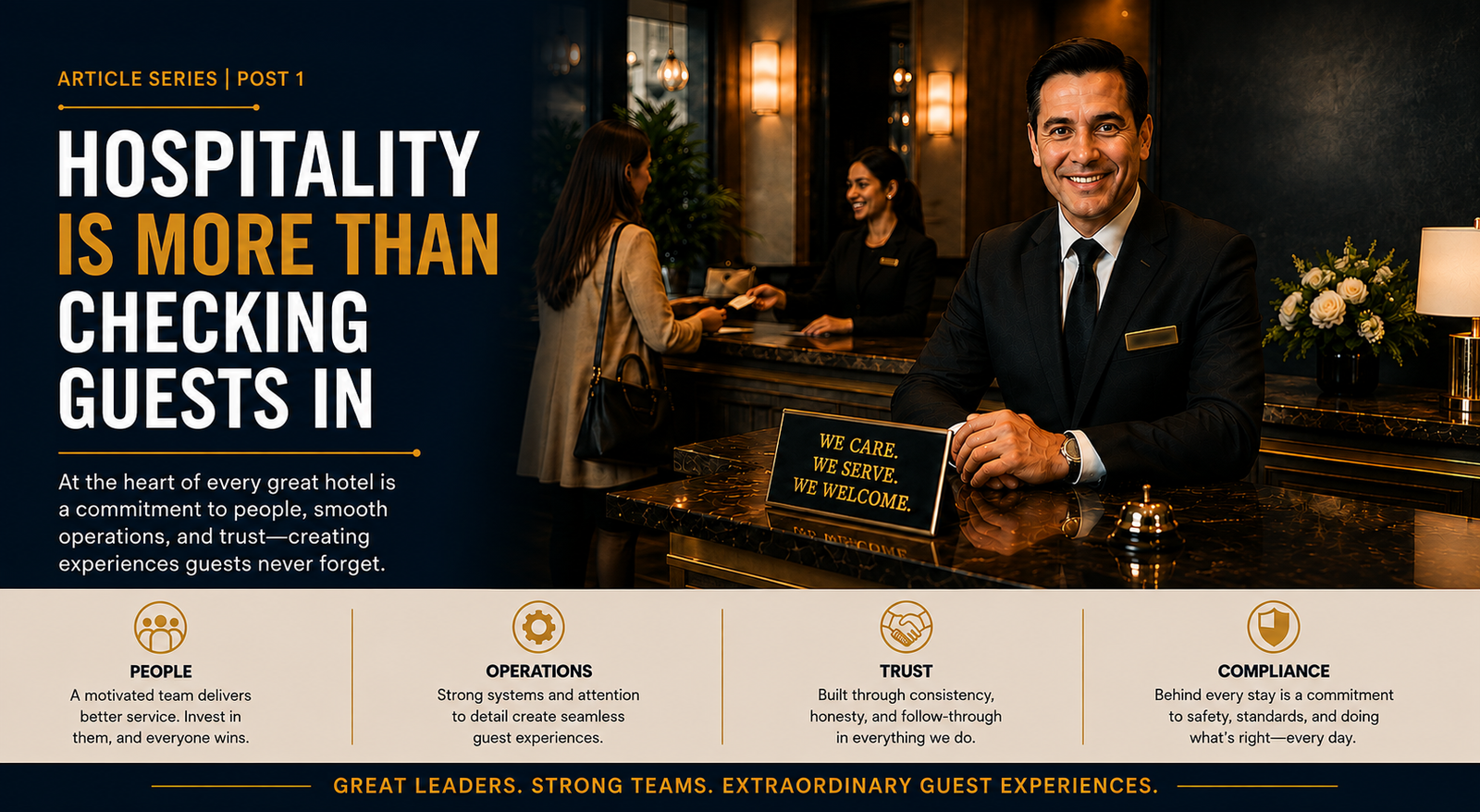
  • Hospitality Is More Than Checking Guests In

    Hospitality Is More Than Checking Guests In

    Where leadership begins.

    After more than 20 years in the hospitality industry, one lesson has remained constant: people may remember the room they stayed in, but they never forget how they were treated.

    Hospitality is often associated with comfortable rooms, clean facilities, and efficient service. While those are essential, the real difference comes from the people behind the scenes who work every day to create a welcoming experience.

    Throughout my career—from Front Desk Agent to General Manager of a boutique hotel in New York City—I have learned that successful hotel operations rely on balancing three priorities.

    01People

    A motivated and respected team delivers better service. Investing in employees through training, communication, and support creates a positive environment for both staff and guests. Over the years, I have also learned that people perform at their best when they feel respected, trusted, and supported. Leadership is not simply giving instructions; it is creating an environment where employees feel confident taking responsibility and know their efforts are valued.

    Great service begins with people who feel respected, trusted, and valued.

    02Operations

    Guests rarely notice when operations run smoothly, but they immediately notice when they don’t. Strong systems, attention to detail, and proactive problem-solving are the foundation of a well-managed property. Behind a seamless guest experience are countless moving parts: staffing, room readiness, maintenance, vendor coordination, communication between departments, and problems that must often be solved before a guest ever knows they existed. Good operations should feel almost invisible to the guest.

    The best hotel operations are often the ones the guest never has to notice.

    03Trust

    Whether working with guests, employees, vendors, or government agencies, trust is built through consistency, honesty, and follow-through. It takes time to earn and only moments to lose. As a manager, I have learned that credibility often comes down to something very simple: do what you say you are going to do. People may not always agree with every decision, but they should be able to trust the person making it.

    Do what you say you are going to do.

    04The Responsibility Guests Rarely See

    One aspect of hospitality that often goes unnoticed is regulatory compliance. Fire safety, building maintenance, accessibility, and operational standards may not be visible to guests, but they play a vital role in providing a safe and reliable experience. Behind every successful hotel is a team committed to meeting these responsibilities every day.

    Over the years, I have learned that these areas cannot operate independently. A great team needs strong systems behind them. Strong operations require trust and communication. And none of it matters unless the guest ultimately feels welcomed and cared for. As a General Manager, my role has been to bring all of these pieces together—often behind the scenes—so that the experience in front of the guest feels effortless.

    Great hospitality may look effortless to the guest, but behind it is a team working together with purpose.

    Hospitality continues to evolve, but one principle remains unchanged: every guest deserves to feel welcomed, respected, and valued.

    As I continue my professional journey, I look forward to connecting with others in the hospitality industry, sharing experiences, learning from fellow professionals, and contributing to conversations about leadership, operations, and guest service.

    What do you believe is the most important quality of a successful hotel leader? I’d enjoy hearing your perspective.

    A free first look

    If any of this sounds like your hotel, I’ll take a look at it—the website, the rates, the guest journey—and send you three clear observations. No cost. No obligation.

    Request your free first look →